What to Expect During Your Vehicle Buying Journey
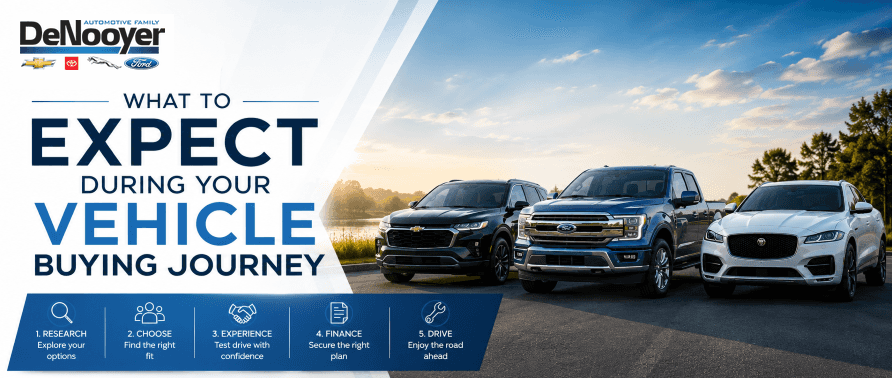
What to Expect During Your Vehicle Buying Journey
From identifying your needs and comparing vehicles to taking a test drive, exploring financing, and learning your new vehicle’s features, understanding the buying process can help you shop with greater confidence.
A Simpler Way to Shop for Your Next Vehicle
Buying a vehicle is a major milestone, but the process does not have to feel complicated. Knowing what to expect at each stage can make it easier to compare your options, understand financing, ask the right questions, and choose a vehicle that fits your lifestyle.
Your Vehicle Buying Journey at a Glance
Identify what you need from your next vehicle.
Compare new and pre-owned options.
Take your favorite vehicles for a test drive.
Review financing and trade-in options.
Learn your vehicle’s features before delivery.
1. Start by Identifying Your Needs
Before comparing models, think about how your next vehicle will fit into your everyday life.
- How many passengers do you regularly carry?
- Do you need additional cargo space?
- Will you tow a boat or trailer?
- Is fuel efficiency important?
- Do you prefer a car, SUV, crossover, or truck?
- Which technology and safety features matter most?
Know Your Priorities Before You Shop
Creating a short list of must-have features can help prevent you from getting distracted by equipment that looks appealing but does not actually improve your daily driving experience.
What Type of Vehicle Fits Your Lifestyle?
Consider efficiency, comfort, maneuverability, and everyday technology.
Look at passenger room, cargo flexibility, safety technology, and available AWD.
Compare towing, payload, cab size, bed length, and drivetrain options.
Consider premium materials, ride quality, technology, and performance.
2. Explore Your Options
Shopping with DeNooyer Automotive gives you access to multiple trusted brands and a wide variety of new and pre-owned vehicles, making side-by-side comparison easier.
Look at vehicles serving similar purposes across different manufacturers.
Review technology, comfort, capability, and safety equipment.
Consider different trims, model years, and new versus pre-owned options.
Think about both purchase price and long-term ownership needs.
More Choices in One Automotive Family
Trucks, SUVs, performance vehicles, and commuter options.
SUVs, pickups, EVs, and performance-focused models.
Cars, SUVs, trucks, hybrids, and family-focused vehicles.
Premium styling, comfort, technology, and performance.
3. Take a Test Drive
Online research can help narrow your search, but driving the vehicle reveals details you cannot fully understand from photos and specifications.
- Seat comfort
- Visibility
- Ride quality
- Steering and handling
- Interior space
- Cargo capacity
- Technology usability
- Parking and maneuverability
Test Drive More Than One
Comparing vehicles back-to-back often makes differences in ride quality, comfort, visibility, controls, and overall driving feel much easier to notice.
Test Drive Checklist
4. Discuss Financing Options
Once you’ve found the right vehicle, the next step is choosing a financing approach that fits your budget and ownership goals.
Review available financing terms for your selected vehicle.
Explore applicable lease opportunities where available.
Understand how price, term, down payment, and rate affect your payment.
Apply eligible trade value toward your next vehicle purchase.
Financing Questions Worth Asking
5. Review Your Vehicle’s Features
Before driving home, take time to become familiar with the technology and controls you will use every day.
Learn how to navigate menus, audio settings, and vehicle controls.
Connect a compatible iPhone for music, navigation, calls, and apps.
Use compatible Android smartphone features through the vehicle display.
Pair your phone for compatible hands-free calling and audio.
Learn what equipped safety technologies do and how to adjust their settings.
Explore available mobile apps, remote functions, and vehicle information.
Before You Drive Home
- Pair your smartphone
- Set your preferred seat position
- Learn the climate controls
- Review driver-assistance settings
- Locate important vehicle controls
- Ask about connected services
- Understand basic maintenance reminders
Ask Questions Before Leaving
A few extra minutes during delivery can save frustration later. If you are unsure how a feature works, ask for a demonstration before you leave the dealership.
6. Enjoy Ongoing Support
Purchasing your vehicle is only the beginning. Routine maintenance can help protect reliability, safety, efficiency, and long-term performance.
Keep up with routine engine maintenance.
Help support even tire wear and consistent handling.
Inspect and maintain important braking components.
Prepare your vehicle for Michigan’s changing weather.
From Shopping to Ownership
| Stage | What to Focus On |
|---|---|
| Research | Lifestyle needs, budget, vehicle type, and must-have features |
| Vehicle Comparison | Price, features, comfort, capability, and value |
| Test Drive | Visibility, handling, comfort, controls, and space |
| Financing | Payment, term, trade-in, and available financing options |
| Delivery | Technology, controls, safety features, and connected services |
| Ownership | Routine maintenance and long-term vehicle care |
Ready to Start Comparing?
Browse new and pre-owned inventory, compare multiple brands, and test drive the vehicles that best match your lifestyle before making your decision.
Begin Your Buying Journey at DeNooyer Automotive
From researching and comparing vehicles to test drives, financing, trade-ins, vehicle delivery, and ongoing maintenance, DeNooyer Automotive is here to help make each stage of your buying journey straightforward and convenient.
Disclaimer: Vehicle availability, financing options, lease programs, trade-in values, incentives, features, connected services, and maintenance requirements vary by vehicle, manufacturer, eligibility, and market conditions. Financing is subject to lender approval. Driver-assistance technologies are designed to support attentive driving and do not replace responsible vehicle operation.